The Country That Got Lucky With Two Letters
In 1995, some administrator at the Internet Assigned Numbers Authority sat down with a list of countries and territories and started handing out two-letter internet suffixes. Anguilla, a 35-square-mile island in the Eastern Caribbean with around 14,000 people and no particular claim to fame, got .ai.
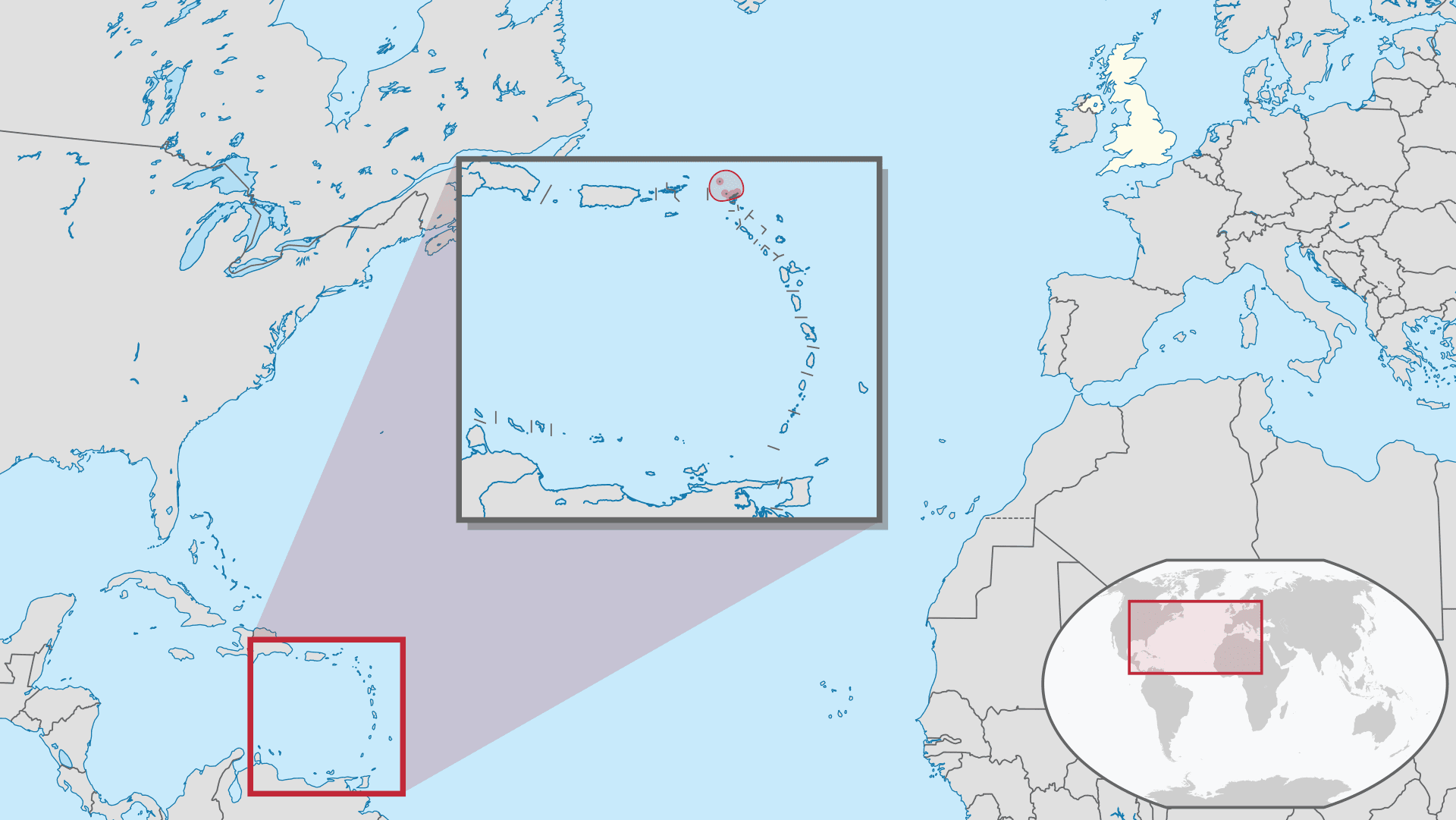
Nobody threw a party. Nobody wrote a press release. The island had fishing, tourism, and a pleasant climate. The letters were noted and filed away.
For the next 27 years, almost nothing happened.
Then, in November 2022, OpenAI released ChatGPT. And suddenly every startup, every venture fund, every tech company scrambling to signal that they were artificial intelligence companies had the same idea at the same time: we need a .ai domain.
Anguilla, which had been quietly collecting a few million dollars a year from its obscure island-code suffix, found itself sitting on top of the digital equivalent of an oil field.
How two letters become a country's economy
The internet has a geography that most people never think about. Every website has an address that ends in something: .com, .org, .net. But countries also get their own two-letter codes, called country-code Top-Level Domains (ccTLDs). The United Kingdom gets .uk. India gets .in. Germany gets .de. Anguilla, by virtue of being a territory that starts with "A" and sits in a specific part of the alphabetical ISO country list, got .ai.
Under the rules of the system, the government of Anguilla administers the .ai suffix. Anyone in the world who registers a .ai domain pays Anguilla. The territory keeps the money.
For most small-island ccTLDs, this is a minor footnote in the budget. A few thousand registrations a year, a modest check, barely worth mentioning. But a tiny number of these two-letter codes happen to spell something meaningful in English, and those are a completely different story.
.ai means artificial intelligence. .tv means television. .io means input/output (a fundamental concept in computing). .fm means frequency modulation, as in radio. When the right technology boom collides with the right two letters, a small territory sitting on a geographically assigned suffix suddenly finds itself with an unexpectedly valuable asset.
The mechanics of this are genuinely odd when you think about them. Anguilla did not invent artificial intelligence. It has no particular connection to it. The territory was simply given letters that happen to spell an acronym that became, in 2023, the most commercially charged phrase in the global technology industry.
The numbers that make your jaw drop
Before 2022, the .ai registry had around 40,000 to 50,000 registered domains. A modest base, growing slowly.
Then the floor fell out. Or rather, the ceiling did.
2020: ~50,000 .ai domains registered. 2022 end: ~148,000. 2023 end: ~354,000 (142% year-over-year growth). 2024 end: ~850,000. January 2026: over 1,000,000 active domains, with 2,000 new registrations processed every single day.
The key structural fact behind the money is the pricing. Unlike .com, which costs around $10 to $15 per year, .ai is a premium domain. The standard rate is $140 for a mandatory two-year registration. That is a deliberate choice to signal quality and filter out spam registrations. And it turns out that AI startups, many of them swimming in venture capital, do not blink at $140.
The renewal rate is roughly 90%. Which means each wave of new registrations compounds. The base keeps growing. The revenue keeps stacking.
Here is what that looks like in practice, broken down by month for 2025:
| Month | Revenue Collected (EC$) | Revenue (USD approx.) |
|---|---|---|
| January | $9.7 million | $3.6 million |
| February | $13.0 million | $4.8 million |
| March | $17.0 million | $6.3 million |
| April | $21.7 million | $8.0 million |
| May | $20.7 million | $7.6 million |
| June | $21.6 million | $8.0 million |
| July | $20.2 million | $7.5 million |
| August | $22.4 million | $8.3 million |
| September | $21.6 million | $8.0 million |
| October | $19.9 million | $7.4 million |
| November | $21.9 million | $8.1 million |
| December | $20.7 million | $7.6 million |
| Total 2025 | EC$230.5 million | ~US$85.3 million |
For context: Anguilla has 14,000 people. The territory generated $85 million from domain registrations alone. That is roughly $6,000 per resident, every year, from two letters that were assigned by international bureaucracy in 1995.
By 2025, .ai revenues accounted for nearly 47% of the entire national government's income and 16.5% of GDP. The Eastern Caribbean Central Bank confirmed that Anguilla ran a fiscal surplus of $171 million that year, representing 12.1% of GDP.
"Not just as a revenue stream. A nation-building tool for the digital age."
That quote is from Premier Cora Richardson Hodge, describing the .ai domain to the legislature. It is not hyperbole.
What Anguilla is doing with the money
This is the part that separates an interesting story from a genuinely impressive one.
The classic failure mode for small territories that suddenly find unexpected windfalls is the "resource curse." Money floods in. It gets absorbed into public sector payrolls, vanity infrastructure, or simply disappears into corruption and mismanagement. The underlying economy does not diversify. When the windfall eventually ends, the state is left worse off than before because it built a budget around income that is no longer there.
Anguilla appears to be doing something more careful.
First, tax relief. The government used the domain revenue to systematically dismantle taxes on its own citizens. In August 2025, they executed a sweeping reform called the GST Relief Plan: the 13% Goods and Services Tax was stripped from retail, wholesale, manufacturing, restaurants, and mobile food vendors. Residential property taxes were abolished entirely. The remaining tax was renamed the "General Services Tax" and narrowed sharply to premium services. A parallel 9% port import tax replaced the previous 13% levy on goods.
The logic is elegant. Anguilla does not make most of what it consumes. It imports nearly everything. A broad consumption tax in that situation is regressive in a particularly sharp way; it punishes every resident for the simple act of buying things. By using foreign-earned digital revenue to replace domestic tax revenue, the government is, in effect, making global AI companies subsidize the cost of living for Anguillian citizens.
Second, infrastructure. The 2026 budget included EC$233 million for physical investment. The biggest piece is the airport: a phased $175 million expansion of the Clayton J. Lloyd International Airport, including runway resurfacing and terminal expansion, aimed at finally allowing large commercial jets to fly directly from North American hubs. The island's economy depends heavily on luxury tourism, and direct flights from New York or Miami are worth more to that sector than almost any other single investment.
The hospital got a significant upgrade too, including on-site medical oxygen plants and solar infrastructure. Before this, the Princess Alexandra Hospital had to import oxygen canisters from neighboring Sint Maarten. During Hurricane Irma in 2017 and COVID in 2020, that supply chain vulnerability was extremely real.
Third, the part that matters most: a Sovereign Wealth Fund. The government is in the final stages of establishing a National Wealth Fund to ring-fence surplus domain revenue. The explicit goals are two things: intergenerational equity (convert today's digital rents into permanent, yield-generating assets so future Anguillians benefit even if the AI domain boom fades) and disaster resilience (the Caribbean gets hit by category 5 hurricanes; having a liquid sovereign reserve means you don't have to beg the IMF for loans the day after the storm).
This is exactly the right move, and it is harder than it sounds. Institutionalizing a windfall requires legislative restraint that is genuinely rare.
Tax Relief
GST gutted
Broad consumption tax stripped from retail, food, restaurants, entertainment. AI companies now subsidize local cost of living.
Infrastructure
Airport and hospital
175M airport expansion for direct US flights. Hospital oxygen plants end dangerous dependency on imports from other islands.
Long term
National Wealth Fund
Ring-fenced sovereign fund converting domain rents into permanent assets. Explicit goal: outlast the AI hype cycle.
Anguilla is not alone. The club is weird.
The .ai situation is the newest and most dramatic entry in a strange category of sovereign income: small territories accidentally holding internet real estate that the world suddenly wants.
The template was set decades earlier by Tuvalu and its .tv suffix.
Tuvalu and .tv
Tuvalu is a Pacific Island nation with roughly 11,000 people and a total land area of about 26 square kilometers. It is one of the lowest-lying countries on Earth, which gives it the distinction of being among the first nations likely to become uninhabitable due to sea level rise. It is also, improbably, the landlord of the entire global television internet.
In 2000, the Tuvaluan government signed a deal with a company called dotTV (later acquired by Verisign) for the rights to administer .tv. The initial deal was reportedly worth $50 million over 12 years, a life-changing sum for a country with a GDP that was essentially the size of a small US town. The domain became standard infrastructure for streaming and broadcasting: Twitch.tv, the BBC, countless local TV stations, Justin.tv (which later became Twitch), gaming and sports streaming services.
By 2021, .tv was generating around $8 to $10 million per year for Tuvalu. The government has used it to fund education, basic infrastructure, and participation in international climate negotiations (notably by paying for seats at summits where Tuvalu is, ironically, lobbying wealthy nations to reduce the emissions threatening to drown it).
The full circle aspect of the Tuvalu situation is not subtle: one of the countries that contributed least to climate change is using internet money, earned from the global media industry, to fund its own survival campaign.
The British Indian Ocean Territory and .io
This one gets darker.
The .io suffix was assigned to the British Indian Ocean Territory (BIOT), a group of islands in the middle of the Indian Ocean administered by the United Kingdom. Tech developers adopted .io because in programming, "I/O" stands for input/output. It became a standard suffix for developer tools, APIs, and tech startups. GitHub uses github.io for its hosting service. Countless startups have .io domains.
The catch: the British Indian Ocean Territory does not really have a civilian population. The original inhabitants, the Chagossians, were forcibly removed between 1968 and 1973 so the UK could lease the largest island, Diego Garcia, to the United States as a military base. The islands were depopulated by design. Former residents and their descendants have been fighting for the right to return ever since.
So who actually benefits from .io revenues? The UK administers them. Some portion flows to the BIOT administration, which is essentially a British military territory. There are no Chagossian residents to tax-relieve or build hospitals for. The domain generates revenue for an uninhabited territory whose population was deliberately expelled to make room for a military base.
In late 2024, the UK and Mauritius reached a deal to transfer sovereignty of the Chagos Islands to Mauritius (Chagossians are largely of Mauritian descent). The political situation has since shifted again. What happens to .io in a sovereignty transfer is an open, genuinely interesting legal question that nobody has fully answered.
ICANN and IANA have announced plans to retire .io as a ccTLD if/when the BIOT territory is formally derecognized as a separate entity from Mauritius. The millions of existing .io domains would likely be grandfathered, but new registrations could stop. Plenty of tech companies built their entire brand identity on a domain that may not technically be assignable in a few years.
Montenegro and .me
Montenegro became independent from Serbia in 2006 and inherited the .me suffix. English speakers immediately saw the obvious: .me works as a personal branding suffix. About.me became one of the first major brands built on it. Now the domain is used for personal sites, creative portfolios, and products that want a casual first-person register. Montenegro earns royalties, and the domain has helped fuel a small but real tech services sector in Podgorica.
Federated States of Micronesia and .fm
The Federated States of Micronesia holds .fm, which became the standard for radio stations and audio platforms globally. Last.fm, the music tracking service, is the most prominent example. The domain generates millions in annual royalties for a Pacific island nation with fewer than 115,000 people.
Libya and .ly
Libya's .ly became briefly famous through URL shorteners like bit.ly (Bitly), which needed a short, memorable domain for their product. The interesting wrinkle here is political: .ly is administered by the Libyan government, which has occasionally revoked domains that it considered morally objectionable. A few URL shorteners using .ly had their domains suspended without warning during the Arab Spring period. Bitly quietly moved their primary infrastructure to bitly.com partly as a hedge.
The Libya case illustrates a risk that Anguilla does not have to the same degree: the government using domain control as political leverage. A Libyan government suspension of bit.ly would cause real damage to a global product. Anguilla's government has no obvious political grievance against the AI industry.
The uncomfortable philosophical bit
Sit with this for a moment.
Anguilla got .ai because it is alphabetically Anguilla, in the Caribbean, in the 1990s. That is the entire explanation. There is no merit involved. No expertise. No foresight. The island did not study artificial intelligence or build technical talent or position itself strategically. A bureaucratic process assigned two letters, those letters turned out to spell something that mattered enormously, and now the island's fiscal situation is transformed.
This happens in the physical world too. Saudi Arabia did not invent oil. Norway did not design the geological process that left petroleum under the North Sea. Botswana did not create diamonds. Natural resource endowments are assigned by geology, not by virtue.
What the .ai case adds is a new wrinkle: the resource was assigned by administrative decision, by a committee following an alphabetical list, and it took 27 years for the resource to become valuable. Nobody involved in the 1995 assignment had any idea what AI would become. The people of Anguilla had no idea. The administrators had no idea.
And yet here we are.
If a committee had known in 1995 that .ai would one day be worth $85 million a year, would they have assigned it to a 14,000-person Caribbean island? Or would the largest economy, the most powerful nation, or the highest bidder have claimed it instead?
The answer is almost certainly "not Anguilla." The system that produced this outcome is the same system that would have been redesigned, had anyone understood what was coming. The randomness is the point.
This also means the beneficiary's job is not to deserve the windfall but to handle it well. And by that measure, Anguilla is doing a genuinely admirable job. The tax relief is real and affects real households. The airport expansion will improve life for the island for decades. The Sovereign Wealth Fund is the kind of institutional discipline that countries like Nauru, which exhausted its phosphate wealth and became nearly bankrupt, famously failed to demonstrate.
The secondary market and the premium names
One layer of this story that does not get enough attention: the speculative market in premium .ai domain strings.
Short, memorable, dictionary-word .ai domains are finite and increasingly contested. Some of the recent transactions:
| Domain | Sale Price |
|---|---|
| you.ai | $700,000 |
| cloud.ai | $600,000 |
| law.ai | $350,000 |
| neural.ai | $120,000 |
| insight.ai | $110,000 |
| vision.ai | $95,000 |
The you.ai buyer was Dharmesh Shah, co-founder of HubSpot, the same person who bought chat.com for over $15 million before selling it to OpenAI. People with serious money are treating short .ai domains the same way people treat Manhattan real estate: finite, desirable, appreciating.
A portion of every auction, every secondary sale, and every premium expiry goes to Anguilla under its partnership with Identity Digital, the US registry operator that took over administration in January 2025. The deal gave Anguilla 90% of all revenues, with Identity Digital retaining 10% to cover all operational costs. That is an exceptional split for a territory that was previously managing the registry through a single person operating out of a local company.
The platform also introduced daily auctions for expiring domains, replacing a slower monthly cadence. The change produced an immediate 20% increase in weekly revenue. Domain squatters who previously captured the secondary premium from expiring names now have to bid against each other in a structured market where 90 cents of every dollar goes to an island in the Caribbean.
What comes next
The honest risk in all of this is obvious: AI hype cycles are real, and they end.
The .com boom of the late 1990s looked permanent until it did not. Registrations collapsed. Revenue collapsed. Companies built on .com speculation went to zero overnight. If the global AI investment frenzy cools, if startups stop naming themselves after the technology and start naming themselves after what the technology does, the demand for .ai domains could flatten or fall.
The renewal rate of 90% is a buffer. A company that built its entire brand around startup.ai is not going to switch to .com just because AI is less exciting. The base is relatively sticky. But new registrations could slow substantially, and the revenue trajectory that produced $85 million in 2025 could plateau or reverse.
This is precisely why the Sovereign Wealth Fund matters. The goal is not to assume the windfall is permanent. It is to convert it into something that is. If Anguilla invests well, the fund generates returns that outlast the domain trend. The island does not need .ai to be the hottest thing on the internet forever. It just needs a 10-year window to convert digital rent into diversified financial assets.
The government has described this as the difference between receiving a gift and keeping a gift. The first part was luck. The second part is work.
A final observation
We have spent decades talking about the "knowledge economy" as if it were primarily about universities and patents and research clusters. The Anguilla case suggests there is another layer entirely: the administrative economy, where significant economic value accrues to whoever happened to be sitting in the right seat when the rules were written.
The .ai domain was not built by Anguilla. It was assigned to Anguilla by a process that could have easily assigned it somewhere else. The value was created by OpenAI, by DeepMind, by Google, by Anthropic, by tens of thousands of AI startups collectively making "artificial intelligence" the most commercially charged phrase of the decade.
Anguilla did not create that value. It is collecting it.
Which is exactly what landowners do with location rents. What petrostates do with oil. What any resource-holding territory does when the rest of the world decides it needs what you happen to have.
The interesting thing about digital geography is that it was laid down in a single decade, in the 1990s, by a small group of institutions following a set of rules that nobody fully understood would matter. Most of those two-letter assignments will never matter. A handful, by luck of language and timing, will define the fiscal futures of small territories in ways nobody planned.
The people of Anguilla did not earn the .ai domain. But if they spend it well, that might not matter.
Building schools, fixing the airport, abolishing regressive taxes, saving for disasters: those things do not require luck. Those things are just governance. And governance, unlike domain suffixes, is something you can actually deserve.
If this was worth sharing, send it to someone on 𝕏 or LinkedIn. Got a question or a thought? Drop me a message , I read everything. If this was worth your time, .