The Grammar of Already Knowing
There is a tense in Biblical Hebrew for people who are done waiting to find out if they were right. It is called the prophetic perfect, and it lets a prophet describe something that has not happened yet using the exact grammatical form you would use to describe something that already did. Not "will happen." Happened. Past tense, completed, filed, done, thank you for your patience.
This is presented in every textbook as a mark of profound faith. I would like to also present it as an extremely early example of a communication style that has since been adopted by consultants, motivational speakers, and anyone with a LinkedIn banner that says "Founder."
What it actually is, before we get uncharitable
In Biblical Hebrew, the perfect verb form (qatal) normally marks a completed action, the grammatical equivalent of a checked box. Isaiah, Jeremiah, and the Minor Prophets used this same completed form to describe events that were, from where the audience was standing, very much still in the future. Isaiah 9:6 announces "a child is born" centuries before said child would arrive. Isaiah 53:5 states "he was wounded for our transgressions" about seven hundred years ahead of schedule.
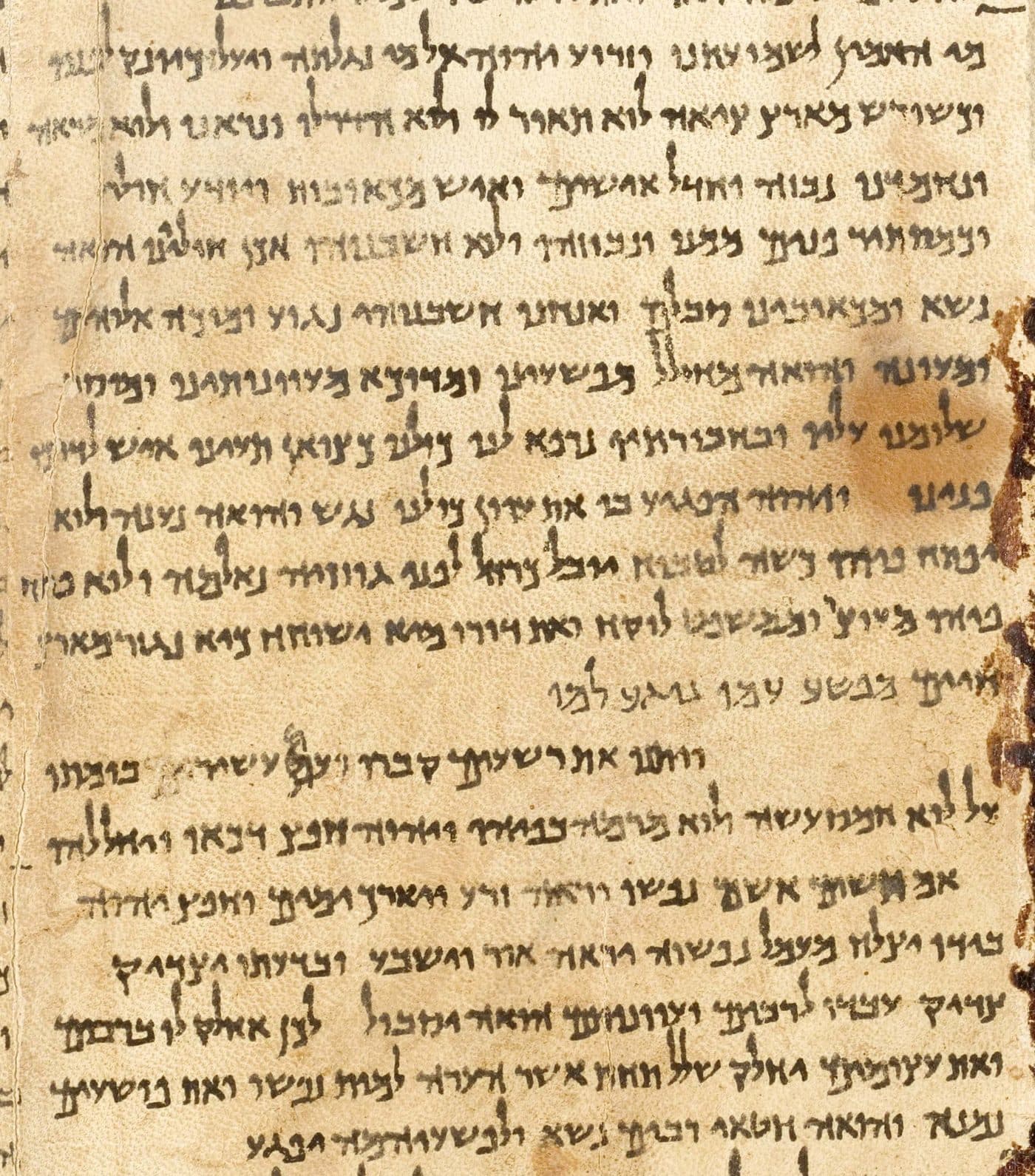
Grammarians call this certainty so total that the prophet mentally teleports to the far side of the event and reports back. I call it the oldest documented case of someone describing a plan as an outcome, but sure, certainty, let's go with certainty.
Here is what that looks like once you stop letting the English translation smooth it over for you.
| Verse | The Hebrew verb | What it literally says | What your Bible probably says instead |
|---|---|---|---|
| Isaiah 9:6 | יֻלַּד (yullad), qatal, "was born" | "For to us a child was born, a son was given" | "Unto us a child is born, unto us a son is given" |
| Amos 5:2 | נָפְלָה (naflah), qatal, "fell" | "Virgin Israel has fallen, she will not rise again" | Most translations keep this one honest, because there was no future left to protect it from |
| Isaiah 53 | a run of qatal verbs across the chapter, "was despised," "was wounded," "we esteemed him not" | a whole biography, delivered in the tense you use for someone who has already died | "He is despised," "he is wounded," present tense, softened just enough to stop sounding like a completed obituary |
Notice the pattern in that last column. English translators, working centuries after the fact and knowing exactly how the story ended, routinely walk the tense back from "was" to "is" so it reads less like a headline and more like a description. Which is a little funny, because the whole point of the original grammar was to sound like a headline.
Click any entry. Everything here already happened, grammatically speaking.
The scholars who noticed, and the one who ruined it
Medieval Jewish grammarians such as Ibn Ezra and David Kimhi spent real intellectual effort cataloguing this habit, because apparently even in the twelfth century someone had to be the person who read prophecy closely enough to notice a verb conjugation problem. Their conclusion, more or less, was that the prophets were so confident in what they saw that ordinary tense could not contain it. A generous read. I am comfortable with a generous read.
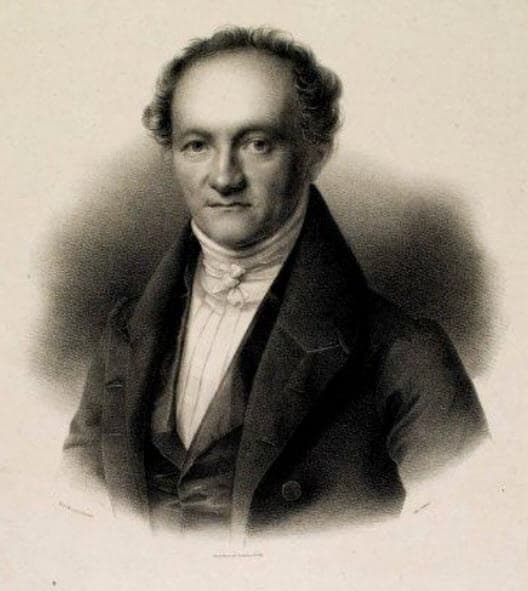
Then in 1813 the German scholar Wilhelm Gesenius formalized the whole thing in his Hebrew Grammar, gave it the very serious Latin name perfectum propheticum, and shipped it into every first-year seminary syllabus from that point forward. Nothing legitimizes a grammatical shortcut quite like a German professor giving it a Latin label and a footnote.
Not every modern linguist is on board. The scholar Max Rogland has argued that "prophetic perfect" is not really its own grammatical category at all, and that most of these instances are better explained as ordinary discourse patterns that only look prophetic in hindsight. I bring this up purely in the interest of balance. The prophets were not available for a response.
Everyone since has been doing this, just with worse material
Once you notice the pattern, you cannot stop noticing it. The prophetic perfect did not disappear when the Hebrew Bible closed. It just went looking for new hosts, and it found several extremely willing ones.
A corporate roadmap that says a feature "shipped" in a quarter that has not started yet is a prophetic perfect with a Jira ticket attached. A manifestation journal entry that reads "I am already the CEO" is a prophetic perfect written by someone who has not yet had the performance review. A sports pundit's preseason column that declares a team "won it" in October is, grammatically, doing exactly what Isaiah did, just with considerably lower stakes and considerably worse hit rate.
A completely unscientific ranking. No respondents were surveyed. No respondents needed to be.
Methodology: vibes. The prophets, notably, did not need a methodology section.
I want to be fair to the modern imitators here, because none of them get the benefit Isaiah had. Isaiah's predictions had centuries to be quietly reinterpreted, generously translated, and lovingly footnoted by scholars who very much wanted them to land. A roadmap slide gets checked against reality in about ninety days by someone in a status meeting who did not want to be there either way.
Why the tense is, grudgingly, kind of brilliant
Here is the part where I have to admit the trick works. Say "this will happen" and you have made a claim about the future, which is a place where claims go to be doubted, hedged, and eventually forgotten by everyone except the person who made them. Say "this happened" and you have made a claim about a fact, and facts do not get workshopped in the comments section.
The prophetic perfect is not a grammatical accident. It is a persuasion device wearing a grammar textbook's clothing. It borrows the psychological weight of the completed past and lends it, at no interest, to a future that has not paid for it yet. Prophets figured this out a very long time before anyone had a word for confirmation bias, and long before anyone needed a growth mindset seminar to explain the same trick back to them at four hundred dollars a seat.
The part where I try to sound wise about it
I do not think the prophets were lying, exactly. I think total conviction genuinely does something strange to how a person talks about the future, and Biblical Hebrew simply had a verb form flexible enough to let that conviction show up on the page. That is a real, interesting fact about language and belief.
I also think it is very funny that the single most confident tense in recorded human language got invented by people describing events they, definitionally, could not have observed yet. Everyone else who has copied the trick since, the roadmap writers, the manifestation crowd, the preseason pundits, is just running the same grammar with none of the humility and considerably more risk of being fact-checked by Tuesday.
The lesson, if there has to be one, is not "speak your future into existence." It is that grammar itself can be a load-bearing argument, and the load it is bearing is usually your certainty, not your evidence. Isaiah at least had the excuse of being a prophet. The rest of us are just filling out the form early.
If this was worth sharing, send it to someone on 𝕏 or LinkedIn. Got a question or a thought? Drop me a message , I read everything. If this was worth your time, .