The Immortal Eleven: Mohun Bagan's 1911 IFA Shield Triumph
There has been a gap in posting here. Work has been busy, and this space had to sit quietly for a while. I am going to keep trying to get more written here even when things are hectic, because I miss doing this. Thanks for sticking around and reading. Onto the story.
On July 29, 1911, somewhere between 80,000 and 100,000 people packed onto the Calcutta Maidan to watch a football match. Special trains were laid on from the East Indian Railway. Steamers were chartered from as far as Bihar and Assam. Tickets that normally cost one or two rupees were changing hands on the black market for fifteen. People who could not get anywhere near the pitch stood outside the grounds and watched the sky instead, where volunteers flew color coded kites to signal what was happening on the field they could not see.
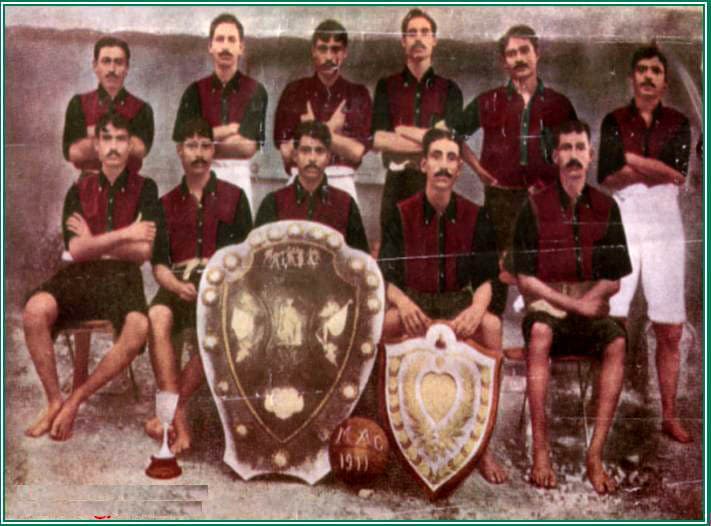
The team everyone had come to watch was Mohun Bagan, a Bengali club playing against a regiment of the British Army called the East Yorkshire Regiment, in the final of the IFA Shield. Ten of Mohun Bagan's eleven players had no boots. They played barefoot, against soldiers in full football kit, for a trophy that had never once been won by an Indian team.
This is the story of that match, and of everything the British administration did afterward to make sure it stayed a one-off.
A game built to keep people in their place
Football arrived in colonial Bengal through the British garrison and the British school system, and it arrived with a purpose attached. The Victorian idea behind organized sport, what the British called the "games ethic," was that structured competition taught discipline, obedience, and a habit of following rules set by someone else. If Indians could be trained to accept the rules of a football pitch without question, the thinking went, they would be a little more inclined to accept the rules of the empire too.
Bengalis took the game and used it for the opposite purpose almost immediately. Nagendra Prasad Sarbadhikari, generally credited as the father of Indian football, started playing as a teenager at Hare School in the late 1870s and went on to found several of Calcutta's earliest clubs. The movement was not free of its own contradictions. Sarbadhikari left one of his own clubs, Wellington, after facing fierce upper caste resistance to fielding a lower caste player, and started the Sovabazar Club instead. Even the resistance to colonial hierarchy had to fight through the region's own hierarchies first.
Mohun Bagan itself was founded in 1889 by Bengali aristocratic patrons, and for its first decade it was not particularly good. In an 1893 tournament, it was thrashed by British Indian Army sides and mocked by rival clubs. Everything changed in 1900, when a man named Sailendranath Basu, a Subedar-major in the British Indian Army, took over as club secretary.
Basu brought a soldier's approach to conditioning: hard fitness drills, gymnastics, and tactical discipline modeled on military training. He kept the standard European 2-3-5 formation but built a style around it that suited his barefoot players, short, fast passing and tight ball control, which let Mohun Bagan slip past the heavier, booted British sides who relied on physical force and long balls. Being barefoot, something the British openly mocked, turned into a genuine tactical edge. By the late 1900s Mohun Bagan was winning regional trophies regularly. It just had not yet touched the one competition that mattered.
A year before Mohun Bagan's win, in 1910, the wrestler known as the Great Gama traveled to London and outlasted world champion Stanislaus Zbyszko for over two hours, forcing a draw that shocked the European sporting press. Mohun Bagan's victory landed inside a wider moment where Indian athletes were publicly testing the idea that British physical superiority was fact rather than propaganda.
The politics sitting underneath the pitch
None of this happened in a vacuum. In 1905, Viceroy Curzon partitioned Bengal along religious lines, a deliberate move to weaken the province's nationalist movement by splitting it. The backlash was the Swadeshi movement, a mass boycott of British goods that turned self-sufficiency and discipline into a political project, and pulled Bengali sport into that project along with everything else. Beating a British team stopped being just a good result. It became a small, public proof that the colonizer was not, in fact, unbeatable.
Central to all of this was "Vande Mataram," Bankim Chandra Chatterjee's 1875 hymn to the motherland, which had become the anthem of the independence movement. The British banned public recitals of it and beat crowds who chanted it, as happened in Barisal in 1906. The Maidan, though, was a strange kind of gray space. Watching football was not illegal. So the crowds who gathered to watch Mohun Bagan sang it anyway, and the matches became a place where nationalist feeling could be voiced under cover of sporting enthusiasm.
The run to the final
The IFA Shield, first held in 1893, had for years been an unofficial preserve of British military and civil teams. When Mohun Bagan entered in 1911, the squad that took the field would later be remembered as the "Immortal Eleven": Hiralal Mukherjee in goal, Bhuti Sukul and Rev. Sudhir Chatterjee at fullback (Chatterjee was the only one of the eleven wearing boots), Monmohun Mukherjee, Rajen Sengupta and Nil Madhav Bhattacharya at halfback, and a forward line of Kanu Roy, Habul Sarkar, Abhilash Ghosh, Bijoydas Bhaduri and captain Shibdas Bhaduri.
Getting to the final took five matches, each one a variation on the same problem: bigger, better equipped opponents trying to bully a technically superior team off the ball.
| Round | Opponent | Score | What happened |
|---|---|---|---|
| First round | St. Xavier's College | 3–0 | Awarded three penalties, but goalkeeper Hiralal Mukherjee saved all three |
| Second round | Calcutta Rangers | 2–1 | Played in heavy rain on a swamped pitch that badly favored the booted side; Mukherjee saved another penalty |
| Quarter-final | Rifle Brigade | 1–0 | A rigid defensive performance against a long-ball British infantry side |
| Semi-final | 1st Middlesex Regiment | 1–1 | A draw against one of the tournament's most physical teams forced a replay |
| Semi-final replay | 1st Middlesex Regiment | 3–0 | Having studied the first match, Mohun Bagan dismantled them entirely |
By the time Mohun Bagan reached the final, word of a barefoot team beating British military sides in a row had already spread across the province.
July 29, 1911
Mohun Bagan lost the toss and defended the Eden Gardens end. The East Yorkshire Regiment came out physical, using their boots and size to unsettle the smaller Indian players, and the first half ended goalless.
Fifteen minutes into the second half, a Mohun Bagan player was penalized for handball just outside the box, and Sergeant Jackson curled the free kick past Hiralal Mukherjee. The enormous crowd went silent.
Captain Shibdas Bhaduri, known as "Pichol Babu," the slippery man, for his close control, switched positions with his brother Bijoydas to confuse the English defensive line. Within about five minutes of conceding, he dribbled through the box and scored the equalizer. Maroon and green kites went up over the Maidan to tell the crowd outside what had just happened.
With two minutes left, Shibdas turned provider, threading a pass to center-forward Abhilash Ghosh, who finished it. Final score: 2–1, Mohun Bagan. For the first time, an Indian team had won the IFA Shield.
Reuters cabled the result back to England, describing the scenes on the Maidan as beyond description. Fans tore off their shirts. Muslim supporters, including members of the Mohammedan Sporting Club, marched with a band to join the largely Hindu crowd heading to the Kalibari temple, a rare, if brief, moment of communal unity built entirely around a football result.
Mohan-Bagan has succeeded in what the Congress and the Swadeshiwallas have failed to do so far, to explode the myth that the Britishers are unbeatable in any sphere of life.
A native paper, Nayak, put it more bluntly, writing that the result would fill "every Indian with joy and pride to know that rice-eating, malaria-ridden bare-footed Bengalis have got the better of beef-eating, herculean, booted John Bull." A story from that day, likely embellished but telling, has a man in the crowd pointing at the Union Jack flying over Fort William and asking when it would come down. The answer, so the story goes, was: the next time Mohun Bagan wins the Shield again. That next win came in 1947. The same year India became independent.
What the British did next
A single football result should not have needed a response from an empire. It got one anyway, and the response says more about how seriously the British took this loss than any newspaper quote could.
The mood in Calcutta's European quarters was described at the time as outright gloom, and it curdled into something uglier in places. One account from the period describes an Englishman slapping a native Christian man on a train simply for asking about the score. But the real response was not emotional, it was institutional, and it played out over the following two decades across three separate channels.
Closing the league
The Calcutta Football League, founded in 1898, had been a whites-only competition for its first fifteen years. After 1911, the Indian Football Association could no longer credibly keep it that way, and in 1914 it let Mohun Bagan and Aryan FC into the Second Division. Mohun Bagan won promotion in 1915, Aryan in 1916.
At that point the IFA introduced a quota: no matter how a native club performed, only two Indian clubs could ever hold a place in the First Division at once. This was not a subtle rule. It had one job, and that was to stop a growing crop of Bengali clubs from taking over the league the way Mohun Bagan just had.
| Year | Second Division champion | What the quota did |
|---|---|---|
| 1917 | Kumartuli Club | Denied promotion, quota already filled |
| 1918 | Kumartuli Club | Denied promotion again |
| 1919 | Kumartuli Club | Denied promotion for a third straight title |
| 1920 | Town Club | Denied promotion, quota already filled |
| 1924 | East Bengal FC | Tied for top spot; the IFA tried to block promotion until East Bengal's backers forced a vote and the rule was finally scrapped |
Kumartuli won the Second Division three years running and never got to test itself in the top flight. That was not an accident of scheduling. It was the rule working exactly as designed.
Losing on purpose
Where the quota system did not do the job, referees did. English officials controlled by the IFA had the power to simply disallow results, and they used it. In the 1912 Shield, the very next tournament after Mohun Bagan's win, the club faced the Calcutta Football Club and scored two clean goals that were both ruled offside by the white referee. A photograph taken at the match by a Persian photography studio showed the calls were wrong. The IFA did nothing, and Mohun Bagan lost 1–2.
It happened again in 1923. The Shield final against Calcutta Football Club was scheduled during two days of monsoon rain that had flooded the Maidan. Standard practice would have been to postpone. The British authorities let it go ahead anyway, on the recommendation of a referee named R.R. Clayton, described by contemporaries as "enormously competent but unashamedly partisan." Forcing a knee-deep, waterlogged pitch onto barefoot players handed the advantage straight to the booted British side, who won 3–0.
The writer Achintya Kumar Sengupta captured the mood of Bengali crowds who watched this happen match after match: "An indisputable goal by Mohun Bagan, and the whistle blows for an offside. The CFC is guilty of a foul, it is ignored or blamed on Mohun Bagan."
Splitting the crowd
The most effective response came from Charles Tegart, the Calcutta Police Commissioner who founded the city's Special Branch in 1911, the same year as Mohun Bagan's win, specifically to track revolutionary nationalist activity. Tegart understood something the referees and the quota system could not fix: a single, unified crowd of 100,000 Hindus and Muslims gathering around one symbol of resistance was a bigger long-term threat than any one match result.
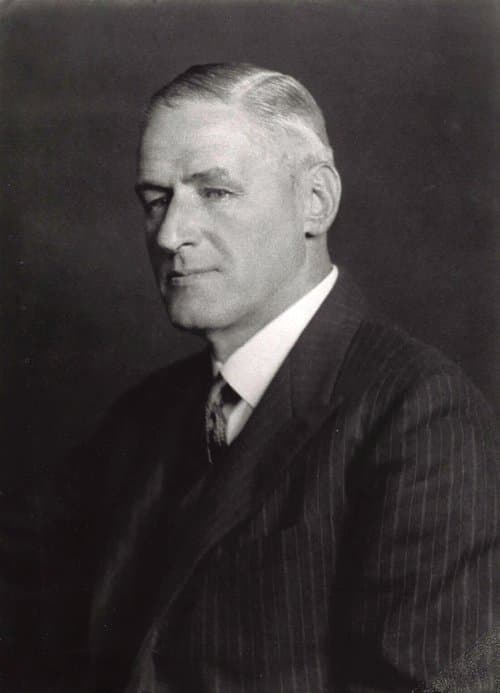
In 1924, when the newly formed East Bengal Club needed a ground of its own, Tegart overruled Mohun Bagan's objections and ordered the two clubs to share the same patch of the Maidan. On paper, it looked like a zoning decision. In practice, it planted two fan bases, the Ghotis (West Bengal natives, Mohun Bagan) and the Bangals (East Bengal migrants, East Bengal FC), a few hundred meters apart and let a rivalry grow between them. That rivalry became the Kolkata Derby, one of the fiercest in world football, and it is still played today. It also did exactly what Tegart needed it to do at the time: it took a mass of energy that had briefly pointed straight at the British administration and redirected a good portion of it sideways, at each other.
None of these responses involved sending soldiers to beat Mohun Bagan on the pitch, because that was never an option the British could take without giving up the whole idea that the game was fair. So the empire fought back using the tools that left the appearance of fairness intact: quotas dressed up as league administration, referee decisions dressed up as sporting judgment, and a ground-sharing order dressed up as urban planning. Each one did real damage while leaving no fingerprints.
There was a global layer to this too. FIFA's eventual requirement that players wear boots, a rule that shaped India's withdrawal from international tournaments in the following decades, standardized the game in a way that quietly erased the exact advantage barefoot Indian players had spent a decade building.
Why this worked, and why it eventually stopped working
The British introduced football to India believing that structured competition taught obedience. What they had not accounted for was that competition, by definition, requires accepting that the other side might occasionally win under the same rules. The moment Mohun Bagan beat the East Yorkshire Regiment fair and square, the British were stuck. They could not send the Army back onto the Maidan to reverse a football score without abandoning the entire pretense of fair play that justified their rule in the first place. So they had to fight back quietly, through committees, quotas, and referees, rather than force.
It is also worth noticing what else happened in 1911. The same year Mohun Bagan won the Shield, the British government reversed the partition of Bengal and announced it was moving the imperial capital from Calcutta to Delhi. The standard explanation is revolutionary violence from groups like Jugantar. It is hard to look at 100,000 people gathering unsupervised in the shadow of Fort William and think the football crowd had nothing to do with that decision either.
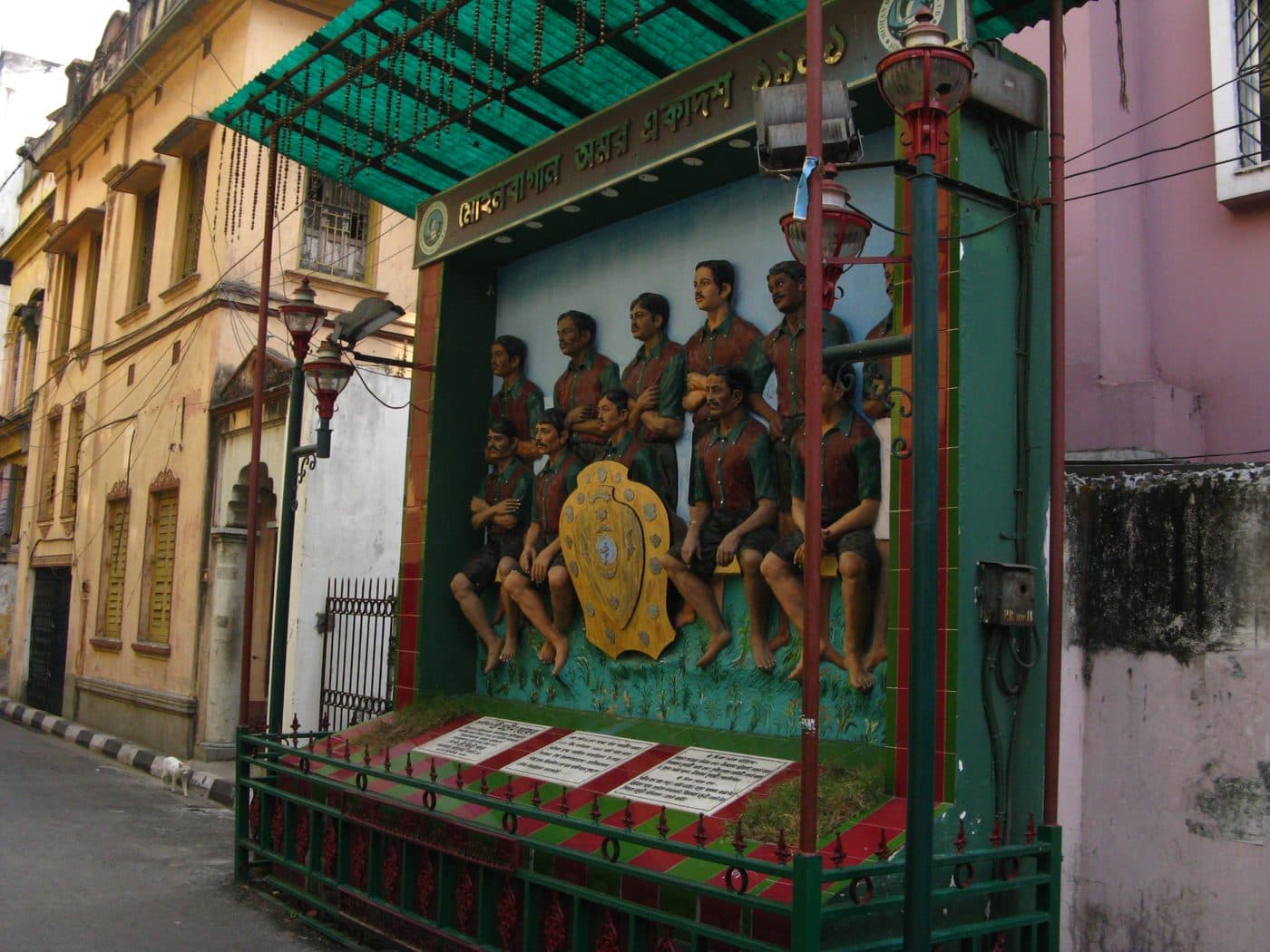
The quotas got voted out eventually, worn down by clubs like East Bengal who simply kept winning until the rule became impossible to defend. The referees kept making bad calls for a while longer, but photographs and written accounts of the injustice kept circulating anyway, which is its own kind of long-term damage to a colonial power that depended on being seen as fair. And the Ghoti-Bangal rivalry Tegart engineered outlived Tegart, the IFA, and the empire itself, for reasons that had far less to do with the British by the time it mattered.
None of it undid 1911. Football in Bengal stopped being something the British taught Indians to play by their rules, and became something Indians used to prove there were no rules the British could set that they could not eventually master and beat. That is a harder thing to legislate away than a league position.
Main sources for the match details, the quota table, and the Tegart ground-share account: contemporary press coverage reproduced in later histories of Mohun Bagan AC, the IFA Shield, and the Ghoti-Bangal rivalry.
If this was worth sharing, send it to someone on 𝕏 or LinkedIn. Got a question or a thought? Drop me a message , I read everything. If this was worth your time, .